XRAID: declustered parity RAID embedded in XFS
Christoph Hellwig unveiled XRAID for zoned XFS. Parity RAID applies only to file data; metadata stays on existing MD RAID. Writes can be up to 20x faster than mdraid.
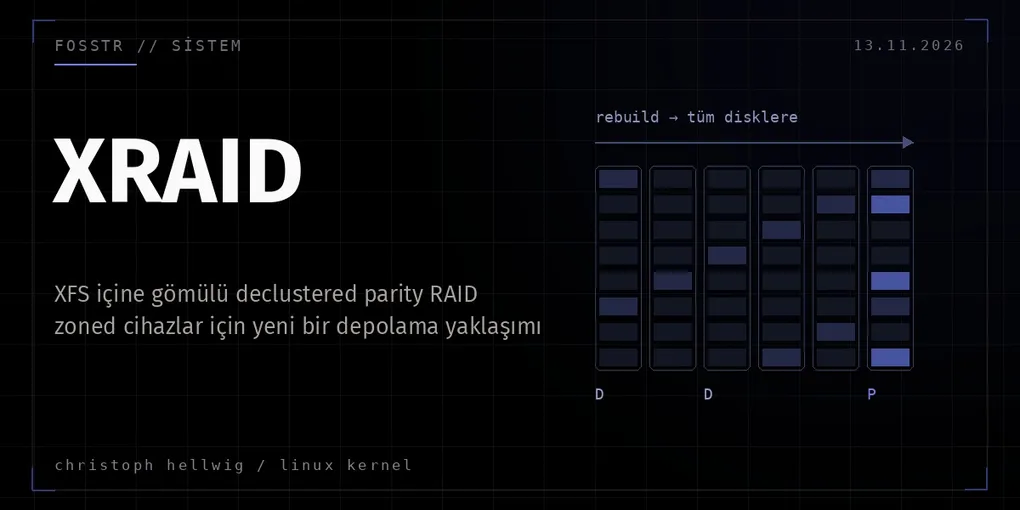
A long-awaited change on the Linux storage side became visible on November 13, 2026: Christoph Hellwig announced the first public release of XRAID, a declustered parity RAID implementation integrated into XFS. XRAID is not a separate block layer or a separate filesystem; it’s RAID embedded inside XFS.
The target is especially zoned XFS setups: devices with sequential-write constraints such as SMR disks. But XRAID also works on conventional HDDs and SSDs. According to Hellwig, even without SSD-specific optimizations, writes can be up to 20x faster than mdraid.
This post explains what XRAID does, how it differs from existing RAID approaches, and why it’s not ready for production yet.
Quick summary
| Field | Value |
|---|---|
| Developer | Christoph Hellwig |
| Announcement | November 13, 2026, LKML |
| Scope | Declustered parity RAID for XFS (notably zoned XFS) |
| Data vs metadata | Parity for file data; metadata on existing MD RAID |
| Status | Early/public preview; not production-ready |
Why declustered parity?
Traditional parity RAID rebuilds can be slow and disruptive. Declustered layouts spread parity/rebuild work to reduce bottlenecks and improve recovery behavior under certain workloads—at the cost of complexity.
Why inside XFS?
Integrating with the filesystem can enable tighter coordination between allocation, write ordering (critical for zoned devices), and parity management than a generic block-layer RAID.
Caveats
- Early code: expect rough edges, changing interfaces, and limited tooling.
- Test thoroughly before any serious use; keep backups.
- Performance claims depend heavily on workload and hardware.
XRAID is an exciting direction for Linux storage, especially for zoned media—but treat it as experimental for now.